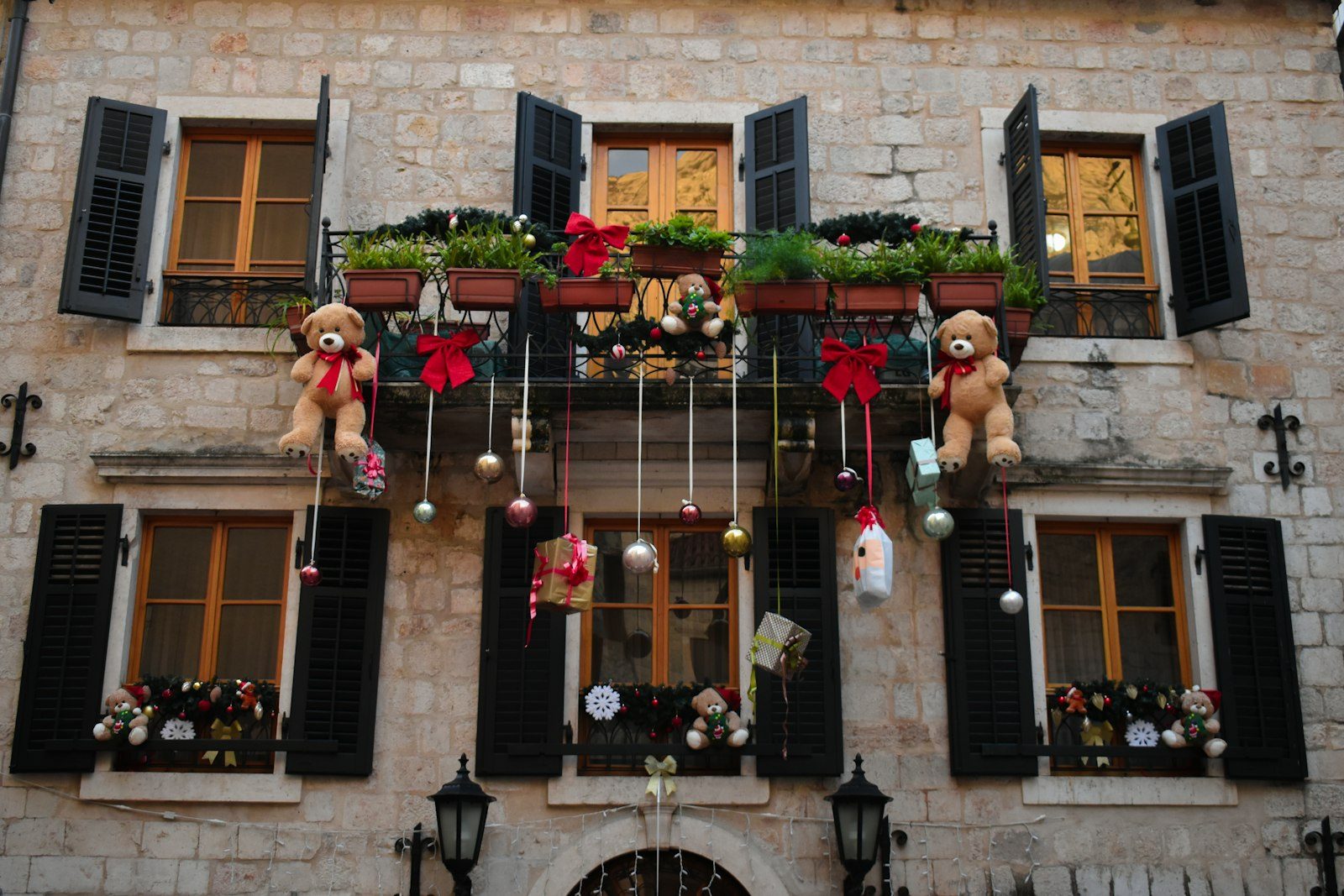
A balcony is the part of your apartment the whole street can see. It’s also awkward to decorate: there’s usually no outdoor outlet, the lease has rules, the neighbors are close, and the wind gets everywhere.
None of that rules it out. It just changes what you buy and how you hang it.
Check the lease first
Most leases are fine with temporary holiday decorations, but nearly all of them ban screws or nails into the outside of the building. Some limit how heavy balcony planters can be, a few restrict real greenery or blinking lights, and HOAs sometimes have rules about dates and colors. It takes five minutes to read the balcony section.
After that, the safe approach is simple: everything either stands on its own or is attached with zip ties, nothing goes into the building, and nothing can fall on the people below.
The railing
1. Garland along the top rail. A 6 to 9-foot faux garland (on Amazon), zip-tied (on Amazon) every 12 inches. Black ties disappear on dark railings, white ones on light railings. Use faux rather than fresh; fresh garland drops needles onto the balcony below you. Fluff it out before you hang it, and weave a strand of lights through it while it’s still on the floor.
2. Planter boxes with winter greens. The over-the-rail planters you use in summer can hold faux greenery, pinecones and a few red berry stems in winter. Pack them tightly so the wind can’t lift anything, and keep all the boxes in one color scheme.
Light without an outlet
3. Battery lights with a timer (on Amazon). This is the main thing to get right. Without a timer you’re leaning over the railing every night to switch them off and replacing batteries every week. With a six-hour timer, one set of batteries can last most of the season. Warm white looks far better outdoors than cool white. A typical balcony needs two strands: one in the garland, one around the door or along the rail.
4. Solar lights, if you get sun. A south or west-facing balcony can run solar string lights with nothing to plug in or replace. North-facing balconies, or ones under a deep overhang, usually don’t get enough light in December. Try them for a week in November; if they’re still bright at 10 p.m., you’re set.
5. A few LED lanterns. Three metal and glass lanterns (on Amazon) at different heights with LED candles inside, on the floor or a small table. They’re heavy enough to stay put and look lovely through the glass door at night. Bring the LED candles in during heavy rain unless the lanterns are rated for it.
A small tree
6. A potted evergreen. A 2 to 3-foot dwarf Alberta spruce in a heavy pot is a living tree that copes with winter outdoors in most places. Use shatterproof ornaments and one strand of battery lights, and water it when the soil dries out, because winter wind dries pots quickly. Check the lease’s weight limit, since a wet pot is heavier than it looks. In spring, plant it or give it to someone with a yard.
7. A tabletop tree on the bistro table. If there’s no floor space, a 2-foot artificial tree on your table does the job. Zip-tie the trunk to the table or weigh the table down; a little tree on a light table catches the wind like a sail.
Make it windproof
8. Zip ties for anything that hangs. Wind between buildings is stronger than it feels at street level. Garlands, lights and ornaments should all be tied, not hooked or draped. Trim the tails short so they don’t rattle. In January, snip them off and the railing looks untouched.
9. Weight for anything that stands. A heavy ceramic pot, some gravel in the bottom of a planter, or a brick hidden inside. If you can tip it over with one finger, a gust can throw it off the balcony.
The door
10. A wreath on the sliding door. It connects the inside and outside: you see it from the couch, and people outside see it with the balcony. Hang it with a suction hook (on Amazon) or an over-the-door hanger, never screws in the frame. Around 22 to 24 inches suits most sliding doors. Use the same greenery as your railing garland so it all looks like one idea.