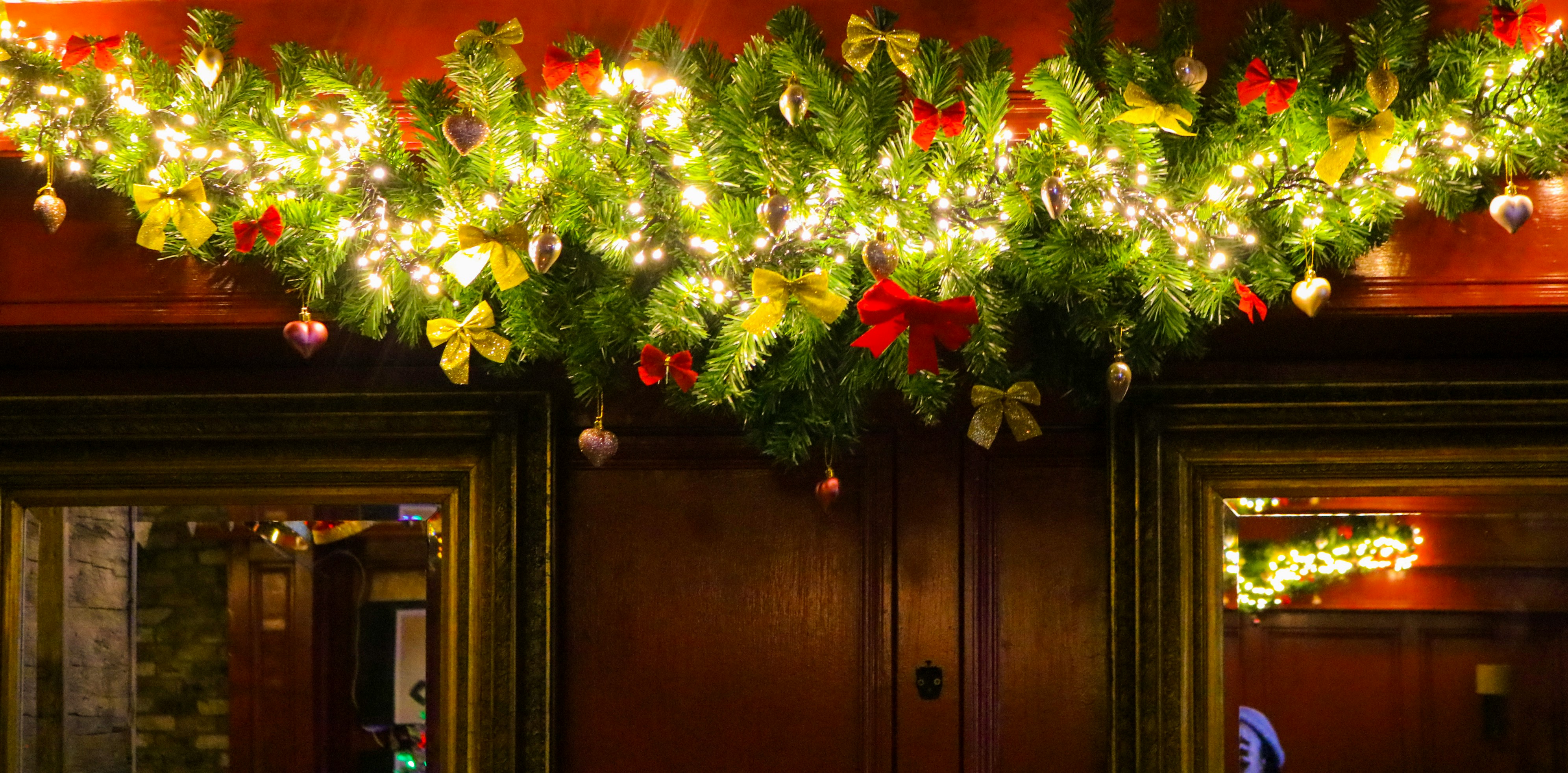
A tension rod lets you put garland across a doorway, window recess or shelf nook without drilling. It only works in the right spot, though, and with a strand light enough for the rod you chose.
What’s in this post
- Where a tension rod actually works
- A lightweight rod for a paper strand
- A wide rod for a wide opening
- Heavier pine, only after weighing it
- Ties that attach, not support
- Test it low before it goes high
Where a tension rod actually works
A tension rod needs two solid, opposite faces to push against: the inside of a door frame, a window recess, or the side walls of an alcove. Both ends have to wedge into the recess. A flat wall or a mantel with no side returns gives it nothing to press on. Skip loose trim, glass, and the sides of fragile cabinets, which can crack or shift under steady pressure.
No drilling doesn’t mean no marks. Rod ends can still scuff or lift paint over a season, especially on fresh or soft finishes.
Measure the actual span, inside face to inside face, and buy a rod whose range covers it.
A lightweight rod for a paper strand
For a light paper strand, a slim rod can be the right size. The Van Wyck lightweight tension rod in brass finish (on Amazon) is spring tension, adjusts from 28 to 48 inches, and is listed as lightweight duty. The listing says it gives the best center support up to 40 inches. Check the maker’s load guidance at your actual span; use it only for something genuinely light unless the maker confirms your exact load. Dense pine isn’t a fit. A paper chain from the DIY garland ideas is the kind of strand it suits.
A wide rod for a wide opening
For a broad window bay or wide pass-through, the ALLZONE heavy-duty wide tension rod in black (on Amazon) is black metal with spring tension and a pin-lock adjustment, and it spans 83 to 123 inches. That range is the point: it’s for a genuinely wide recess, not a standard interior door, which it won’t fit. The maker mentions garland as a use, but that is not a load guarantee. Read the instructions, weigh the greenery you plan to hang, and check both against your installed span. It comes with no garland, bows or lights.
Heavier pine, only after weighing it
The Janinka pine garland, three strands (on Amazon) is flexible PVC with inner wire and pinecones. Before hanging one on any rod, weigh a single strand on a kitchen or bathroom scale and compare it with what your rod’s maker supports at your installed span. Nothing promises it fits or holds on a given rod. The garland buying guide covers how much greenery to buy.
Ties that attach, not support
VELCRO Brand holiday garland ties (on Amazon) come as a green fabric hook-and-loop roll, 30 feet long, that you cut to length and can reuse. Wrap a short piece around the garland and rod every so often. The ties keep foliage from sliding or twisting. They don’t add any capacity to the rod or turn it into an anchor.
Test it low before it goes high
- Install the rod, with no garland, at a height you can reach easily, and tighten it the way the maker describes.
- Attach the garland while you’re supporting its weight, not letting it hang off the rod mid-install.
- Leave it for a while and check whether the ends slip or the middle sags.
- Only then move it into its final position.
Never put a pressure rod above a busy exit unless it’s secured, and keep it clear of door closures and escape routes. Keep garland away from heaters, lamps and curtains it could drag on. For other approaches, see renter-friendly Christmas decor.