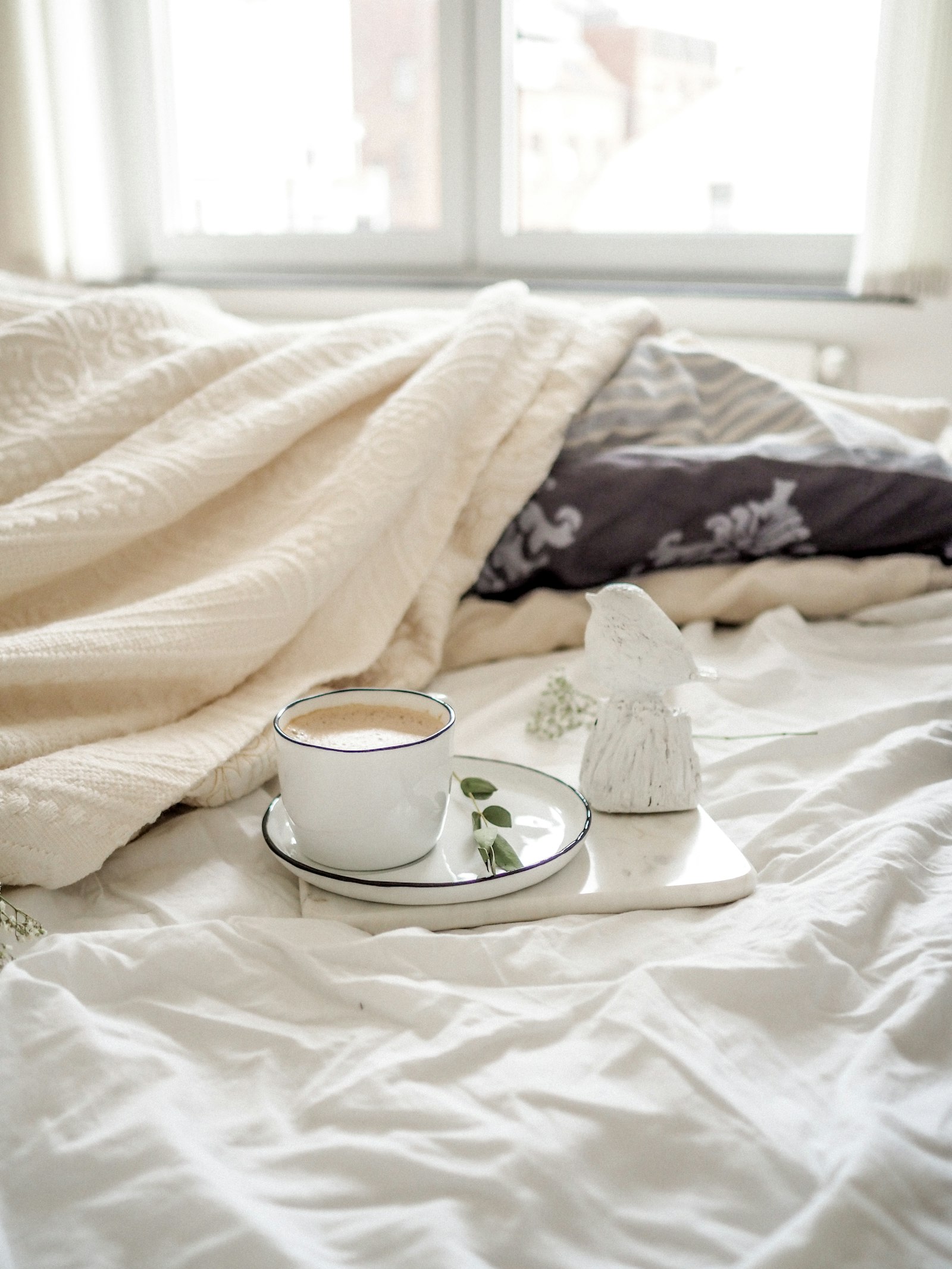
A cold bed is mostly a layering problem. People pile on heavier and heavier blankets, wake up overheated at 3am, kick them off, and wake up cold at 5. A bed made of a few thinner layers is warmer and easier to adjust.
Here’s how to build one, from the mattress up.
1. The mattress layer
Cold rises from below more than people think, especially on a platform bed or in a ground-floor apartment. A heated mattress pad (on Amazon) sits under the fitted sheet and warms the bed before you get in. You don’t need it on all night. Turn it on half an hour before bed and switch it off, or use one with a timer.
This is the most useful single thing for a drafty room or anyone who’s always cold. It also uses far less electricity than heating the whole bedroom.
2. Sheets
Switch to flannel sheets (on Amazon) once nights drop below about 50°F. Flannel is brushed cotton, so it traps a little air and feels warm right away instead of cold. Look for a weight of around 170 grams per square meter or more; thin flannel pills quickly.
If flannel feels too warm, jersey (T-shirt cotton) is a middle ground.
3. The comforter
The main warm layer. A down alternative comforter (on Amazon) is washable, cheaper than down and fine for allergies. Put it in a duvet cover (on Amazon) so you only ever wash the cover. It also lets you change the look of the bed for the season by changing one thing.
If you run hot, use an all-season weight and add layers on top. If you’re always cold, go for a winter weight.
4. A wool blanket
Between the comforter and the sheet, or folded across the top of the bed. A wool blanket (on Amazon) is the layer you add or take off depending on the night. Wool keeps you warm without trapping sweat the way synthetic fleece does, which is why it works so well in a bed.
Fold it in thirds across the foot of the bed in the day and pull it up at night.
5. A throw for the in-between
A knit throw (on Amazon) on top is mostly for looks, and for reading in bed or napping without getting under the covers. It’s also the thing that makes the bed look like winter.
Small things that help
- Close the curtains at dusk. Windows lose a lot of heat; heavy curtains help a little.
- Move the bed off an outside wall if you can. Even a few inches from a cold wall makes a difference.
- Socks. Warm feet help you fall asleep faster.
- Keep the room cool anyway. About 65°F is ideal for sleep. A warm bed in a cool room is better than a warm room.
How the bed should look
White or cream sheets, a duvet in a soft neutral, the wool blanket in a color (oatmeal, grey, deep green, rust) folded at the foot, and the throw on top. It looks layered and cozy without looking like a pile of blankets. Two sleeping pillows and one or two decorative ones are enough.
For changing the bedroom more broadly for the season, see fall bedroom decor.