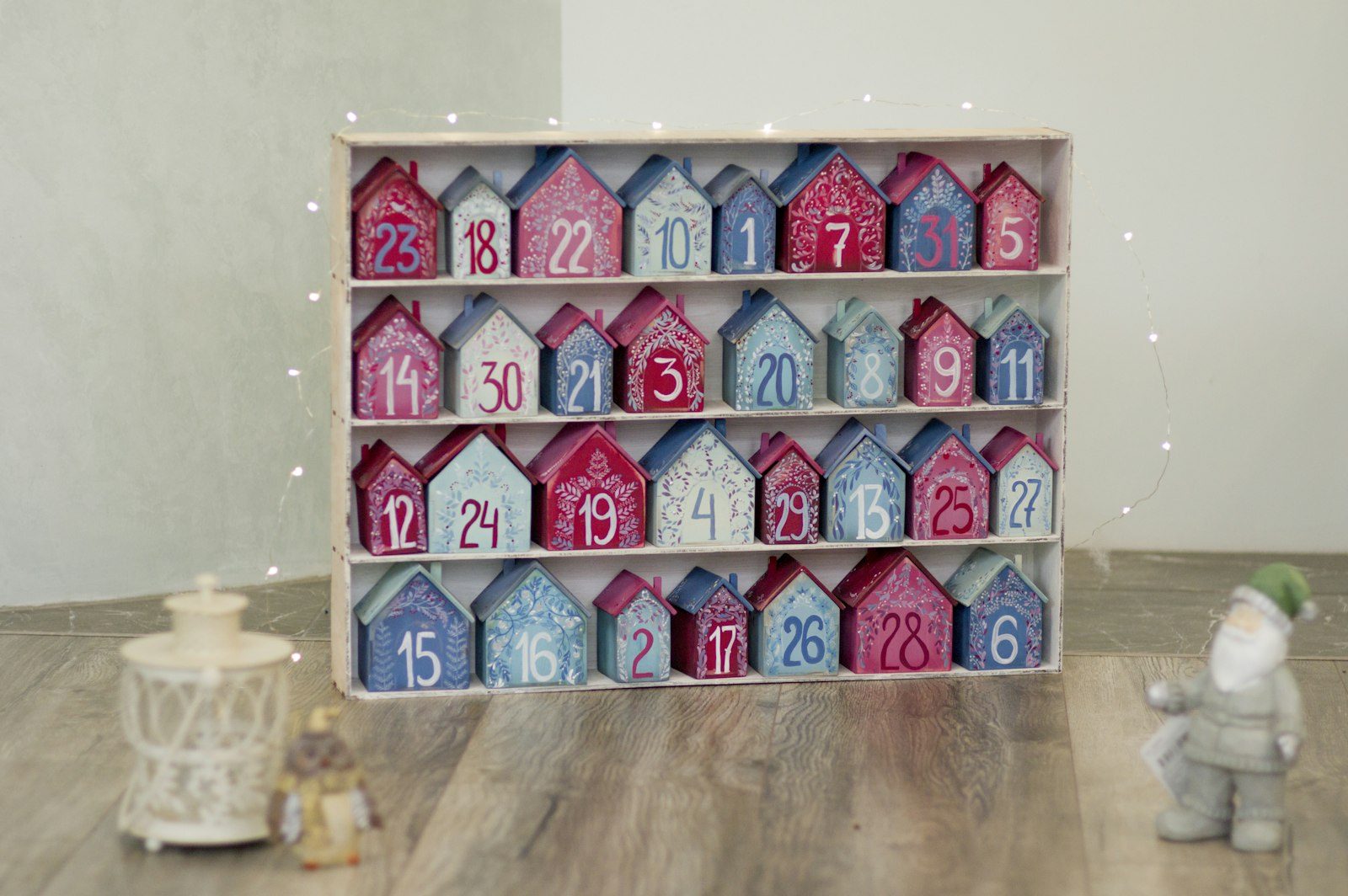
An advent calendar sits out for almost the whole of December, which is longer than some people keep their tree up. So it’s worth getting one you actually like looking at, rather than a cardboard box that sags by the 10th.
Most of the ones below are refillable. You buy them once and they come back every year.
Wooden ones
1. A tower of 24 drawers. About the size of a shoebox standing on end, 12 to 16 inches tall, with small numbered drawers. It fits on a mantel, a bookshelf or a console without taking over. If you only get one refillable calendar, this is the safe choice. Check that every drawer slides smoothly before December 1; on cheap versions they stick.
2. A row of little wooden houses. Each house is a day (example (on Amazon)), with a door that opens. A full set runs about 24 inches long, which is roughly a mantel’s width. It looks like a Christmas village first and a calendar second. Kids will rearrange the houses every morning, and that’s fine.
3. A flat wooden tree for the wall. A tree-shaped board with 24 hooks or pockets, 24 to 30 inches tall. It hangs flat, so it’s a good answer if every surface in your place is already taken. It’s light enough for a single heavy-duty adhesive hook.
Fabric ones
4. A felt tree with pockets. Like this one (on Amazon). Soft, light, and impossible to break, which makes it the best pick if you have a toddler. Look for reinforced stitching on the pockets; felt stretches, and cheap ones sag after a season or two. It folds flat into a drawer.
5. Bags on a string. Twenty-four small numbered bags clipped to twine with mini clothespins (on Amazon), strung across a window or mantel. It’s the most flexible option: kraft paper bags one year, velvet pouches the next. You need 6 to 8 feet of twine and two hooks, and it’s up in ten minutes.
6. A quilted wall hanging. The kind that’s often handmade and comes out every year for decades. It costs more, but it’s the one that becomes part of the tradition. If you sew, it’s a good November project.
Small-space and modern
7. Magnetic tins on the fridge. Twenty-four little tins you can arrange in a grid or a tree shape. No wall, no shelf, and the fridge is somewhere everyone goes every morning anyway. After December they’re useful for spices or desk clutter.
8. A rack of test tubes. A wooden rack holding 24 tubes filled with candy, bath salts or rolled-up notes. It looks neat on a bathroom or bedroom shelf. Glass tubes aren’t for small children.
9. A stack of matchboxes. Wrap 24 blank matchboxes in paper you like and stack them into a pyramid about a foot tall. It’s the cheapest idea here and makes a nice coffee table piece. Kids can help wrap them.
For adults
10. Mini wine or beer. Boxes with slots for small bottles or cans. These sell out earlier than anything else on this list, usually by early November.
11. Beauty or jewelry. The expensive end: small products or pieces in a drawer box designed to look good on a dresser. Keep the box afterward; the drawers make good storage.
12. Activities instead of things. Twenty-four small rolled notes in a jar, each with something to do: make hot chocolate, walk around to see the lights, call a grandparent. It costs next to nothing and doesn’t add more stuff to the house.
Where to put it
Somewhere the daily opening actually happens: on the fridge, by the coffee maker, in the hallway the kids walk through in the morning. Hang it at the height of whoever is opening it, which is usually a child. Keep chocolate-filled calendars away from radiators and sunny windows.
In January, wrap wooden ones in tissue with the drawers facing up so nothing slides out. Fold fabric ones flat rather than hanging them, or the pockets stretch. Label the box clearly so you find it next November.